
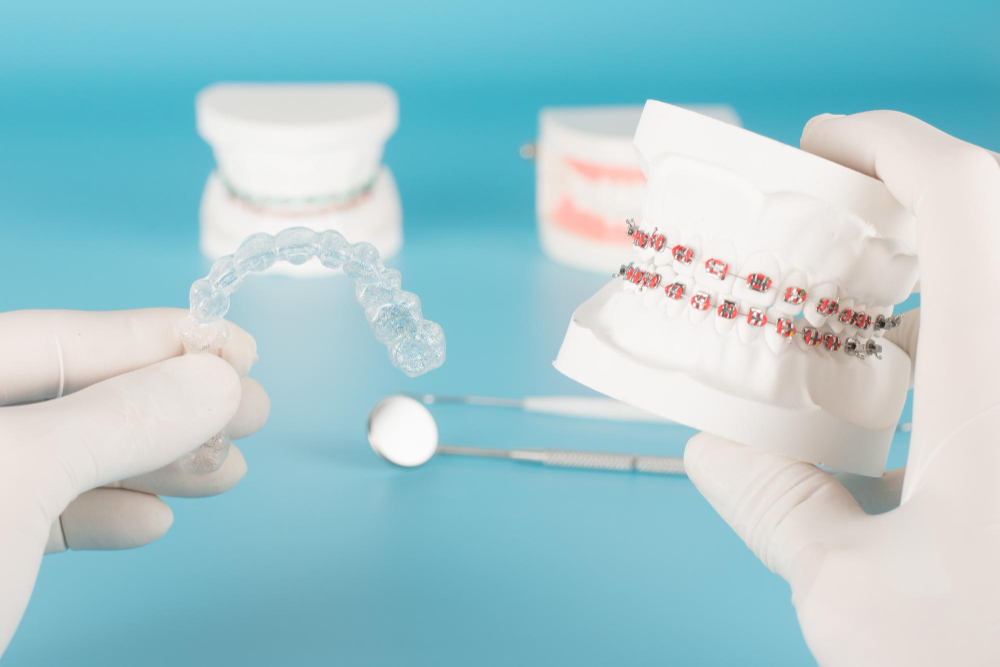
When it comes to straightening teeth, many people ask, “Aligners vs Braces – Which Is Better?” Choosing the right option can affect your dental health, comfort, and confidence. Both clear aligners and traditional braces help fix crooked teeth. However, they work in different ways. Understanding their differences can help you make the best choice for your smile.
What Are Aligners?
Aligners are clear, plastic trays that fit over your teeth. You wear them to gently move your teeth into place. Most people know them as “clear aligners.” For example, Invisalign is a popular brand. You can remove aligners when you eat or brush your teeth. Usually, you get a new set every few weeks as your teeth shift.
What Are Braces?
Braces use metal or ceramic brackets attached to your teeth. Wires connect the brackets and apply gentle pressure. Over time, this pressure moves your teeth into the right position. Traditional braces stay on your teeth until your treatment ends. Some braces are less visible, using clear or tooth-colored materials.
Key Differences Between Aligners and Braces
Pros and Cons of Aligners
Pros and Cons of Braces
Effectiveness and Results
Both aligners and braces can straighten teeth well. However, braces are often better for complex cases. According to dental studies, braces may work faster for severe crowding or bite problems. Still, aligners are very effective for mild to moderate issues. For many adults, aligners or braces for teeth straightening both give great results.
Cost Comparison
Cost is important for many families. Usually, traditional braces cost less than clear aligners. However, prices vary by location and treatment length. Some dental insurance plans help cover the cost. It is wise to ask your dentist for a full price estimate before you decide.
Comfort and Aesthetics
Many people choose aligners because they are almost invisible. Also, aligners have smooth edges, so they rarely cause mouth sores. On the other hand, braces can feel rough and may poke your cheeks. However, some people do not mind how braces look, especially if they want colored bands.
Maintenance and Oral Hygiene
With aligners, you can remove them to brush and floss. This makes it easier to keep your teeth clean. But, you must remember to put them back in after eating. Braces stay on your teeth, so cleaning around wires and brackets takes more effort. For both options, good oral hygiene is key to a healthy smile.
Who Should Choose Aligners or Braces?
Choosing between aligners or braces depends on your needs. For example, aligners are great for adults or teens with mild to moderate problems. Braces may be better for children or those with complex dental issues. Your dentist can help you decide which is better for teeth straightening in your case.
Frequently Asked Questions
In summary, both aligners and braces can help you get a straight, healthy smile. However, the best choice depends on your needs and lifestyle. Consult a dental specialist Dr. M.Y. Kiran Kumar to find the best teeth-straightening option for you.